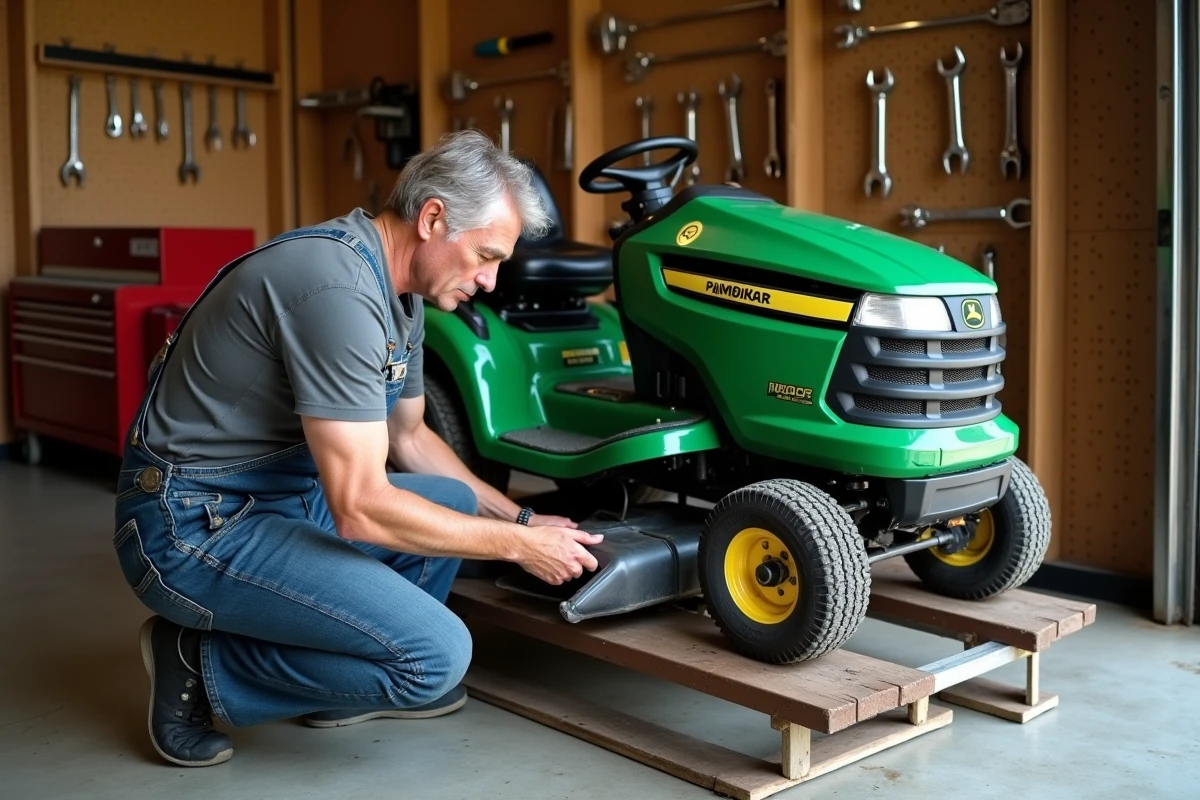
A lawn tractor lift is a device that raises the front or one side of a riding mower to access the cutting deck, blades, or belts. Commercial models use a hydraulic cylinder, a worm screw, or a ratchet system. Designing your own means reproducing one of these mechanisms with common materials, while respecting stability and strength constraints.
Load Calculation and Safety Factor for a Homemade Lawn Lift
Before choosing a tube or angle iron, the first data to establish is the actual load to be lifted. A lawn tractor does not weigh the same when empty and with a full tank. The lifting point also alters the load: lifting the front transfers part of the weight to the rear wheels, which reduces the effort required from the mechanism.
The EN 1494 standard requires jack manufacturers to have a safety factor that ensures the equipment can support a load significantly greater than the nominal load. For a homemade lawn lift, applying a factor of at least 1.5 is a reasonable minimum: if the estimated load at the lifting point is 120 kg, the frame and cylinder must support at least 180 kg without deformation.
This calculation dictates the choice of each component. A square steel tube with too weak a section will buckle under the load, while an oversized profile will make the whole assembly unnecessarily heavy. A detailed guide on homemade lawn tractor lift construction helps better size each part according to the specific riding mower model.
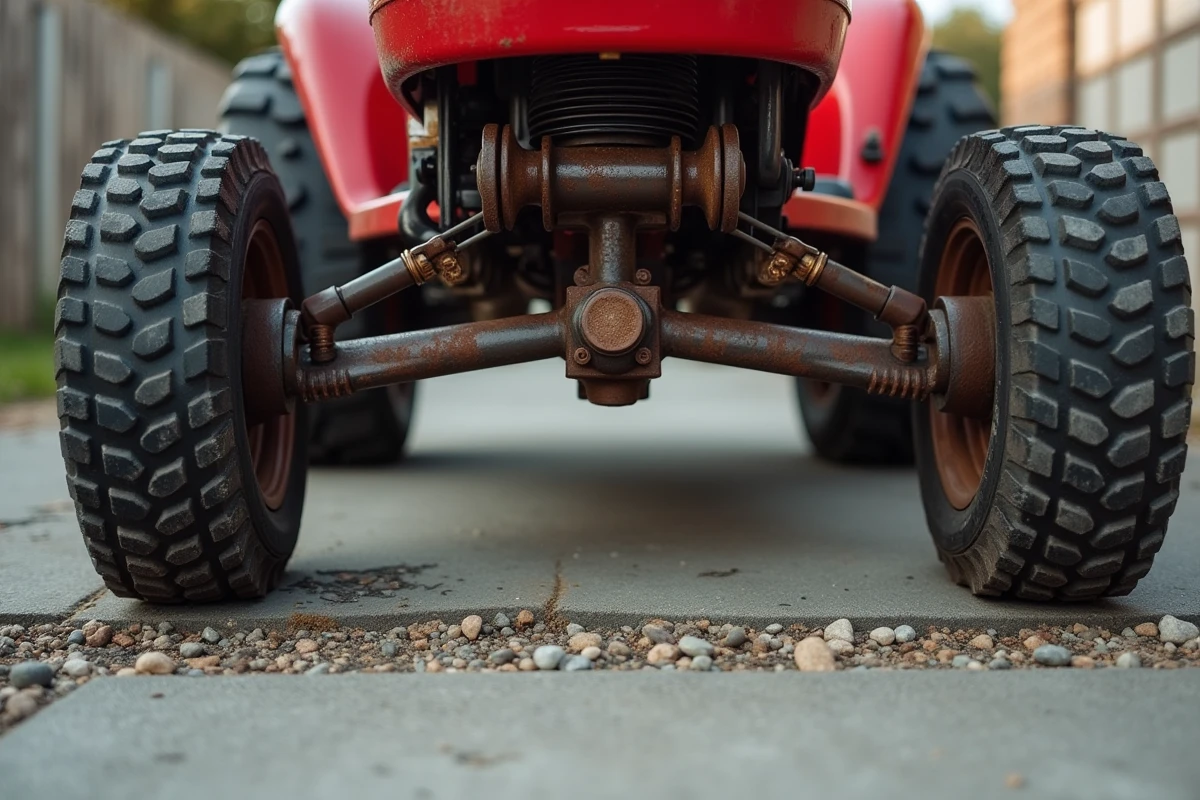
Frame and Lifting Point: Material Choices and Welding
The frame of the lawn lift constitutes the load-bearing structure. There are two basic options: rectangular steel tube (type 40 x 40 mm, thickness 3 mm) and L-shaped angle iron. The rectangular tube offers better resistance to bending for a comparable weight, making it the most common choice.
Assembly by Welding or Bolting
Arc or MIG welding produces rigid and compact assemblies. It requires a welding machine, a suitable mask, and proper preparation of the joints (beveling, degreasing). Bolting with class 8.8 bolts remains a solid alternative for those who do not weld, provided to multiply the fastening points and never use a single bolt as the main pivot.
The lifting point depends on the type of lift chosen. A front lift places the support point under the nose of the frame, in front of the front axle. A side lift uses an arm that slides under the cutting deck. The front lift is simpler to construct for a first project, as it only stresses the mechanism on a vertical axis.
Anti-Return System and Lateral Stability
A lawn lift without a mechanical locking device is dangerous. If the cylinder releases or if the screw retracts, the machine falls. The EN 1494 standard requires an anti-return system on jacks. For a homemade model, three solutions fulfill this role:
- A removable pin or shaft inserted into a hole drilled in the lifting rod, which mechanically blocks the descent even if the cylinder loses pressure.
- A ratchet welded or bolted onto the lifting arm, preventing any reverse rotation of the screw or lever.
- An independent safety prop (mechanical jack) placed under the frame once the machine is lifted, which supports the load in case of failure of the main mechanism.
Lateral stability is addressed by the width of the base. A base that is too narrow compared to the lifting height causes tipping. The practical rule: the width of the base must exceed half of the maximum lifting height.
Lifting Mechanism: Hydraulic Cylinder, Screw, or Trolley Jack
The choice of mechanism depends on the budget, frequency of use, and desired lifting height.
The bottle hydraulic cylinder is the most accessible. They can be found for a few dozen euros in auto parts stores. Its stroke is limited (often around 15 to 20 cm), which is sufficient to access the blades and cutting deck. Its disadvantage: it only works vertically. When tilted, it loses efficiency and reliability.
The worm screw (crank system) offers more gradual control of the lift. It requires no power source and remains locked in position as long as the crank is not turned, making it a natural anti-return. Manufacturing requires a clean thread and a properly aligned bearing nut, to avoid hard spots or jamming.
The automotive trolley jack, repurposed from its original use, constitutes a third option. It combines hydraulic lifting and wheels, allowing slight movement of the mower once lifted. Its main drawback: the lifting height remains low, and the support plate is not always suitable for a riding mower’s frame without modification.
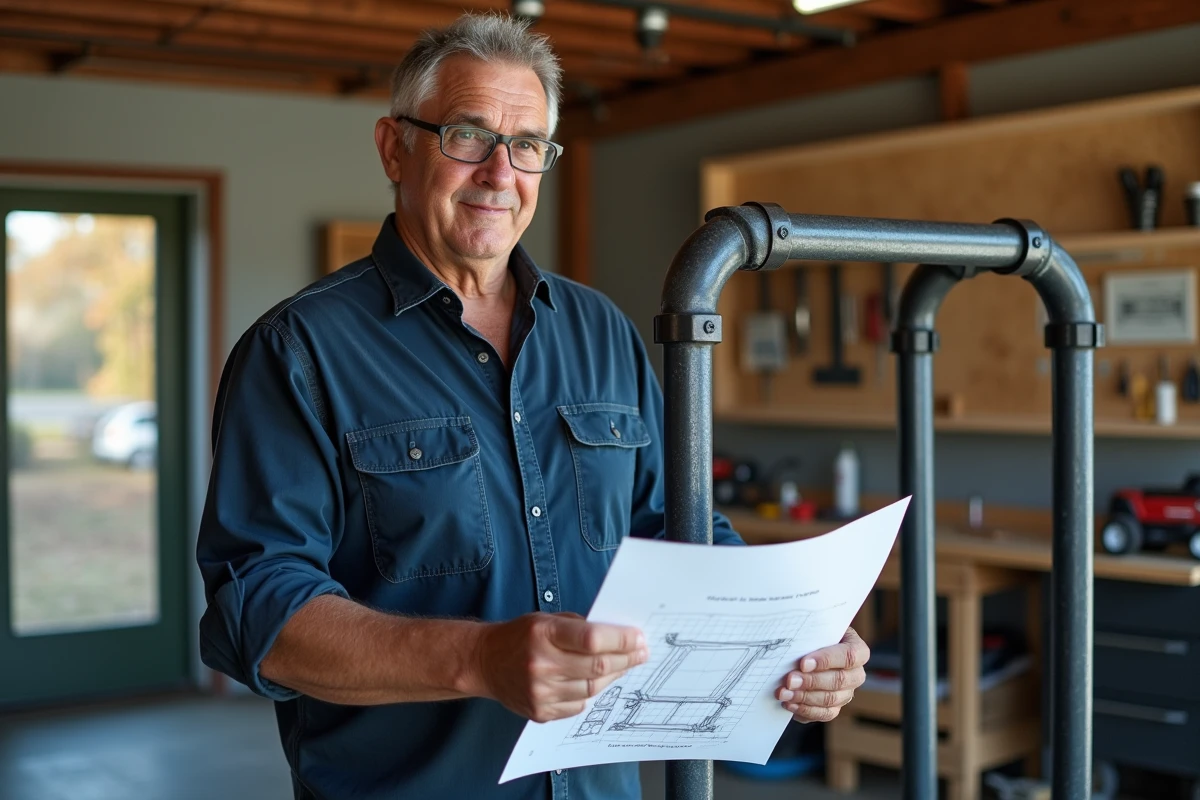
Maintenance of the Lawn Lift and Design Errors to Avoid
A homemade lift made of raw steel rusts quickly if stored in a damp garden shed. A coat of anti-rust paint or epoxy varnish over the entire frame extends its lifespan by several seasons. The joints (shafts, pivots) require regular greasing to avoid jamming, especially on screw systems.
Some common mistakes often occur in homemade constructions:
- Using a single ground support point without an enlarged base, making the lift unstable as soon as the mower moves.
- Neglecting the fastening between the lift and the lawn tractor: without a hook, strap, or stop, the machine can slide off the support during maintenance.
- Omitting the safety prop. The lifting mechanism is for raising, the prop is for holding. Both are complementary.
- Undersizing the welds by using too thin a bead or welding on rust, leading to fragile breaks under load.
The Machinery Regulation (EU) 2023/1230, which will come into effect in 2027, strengthens the requirements for documenting tipping hazards and redundant locking devices for marketed lifting equipment. Drawing inspiration from these requirements, even for strictly personal use, allows for the construction of a truly safe lawn lift over time.