
In a shared rental, rent and utilities are the largest shared expense and the main source of friction between housemates. Before choosing a way to split the costs, it’s important to understand the two ways the lease may handle utilities: a flat-rate charge or advance payments. This distinction affects how housemates manage their finances day to day and when bills are reconciled.
Flat-rate charges or advance payments: what the lease changes in practice
A flat-rate charge is a fixed amount paid each month on top of the rent. There is no year-end reconciliation: housemates neither pay an additional amount nor receive a refund. However, the amount must not be clearly disproportionate to the actual charges.
Advance payments for charges work differently. Each month, housemates pay an estimated amount in advance. The landlord then carries out an annual reconciliation based on supporting documents, with an itemised breakdown by type of charge.
With advance payments, housemates have specific rights. The landlord must provide a breakdown by type of charge and explain how charges are allocated in a multi-unit building. Supporting documents must remain available for consultation for six months. If the reconciliation is carried out late, the tenant can ask to pay any balance in monthly instalments over twelve months.
Understanding how rent is split in a shared rental means understanding this distinction, as it determines whether an excess amount can be claimed or whether the amount paid remains with the landlord.

Splitting rent in a shared rental: agree on a rule before moving in
The rent-splitting rule should be agreed in writing before anyone moves in. Two approaches are most common, but they are not suited to the same situations.
Equal shares between housemates
Dividing the rent by the number of housemates is the most straightforward method. It works well when the bedrooms are similar in size and there is no significant difference between occupants’ incomes.
Proportional shares based on bedroom size
Adjusting the rent according to the size of each bedroom can reduce the sense of unfairness when private spaces differ. A housemate with a larger bedroom pays more, reflecting the practical benefit they enjoy.
Whichever method you choose, problems rarely arise when the rule is agreed; they tend to occur when it has not been put in writing. A simple document signed by all housemates, separate from the lease, is enough to set out the terms. It should specify the method, each person’s share and how the arrangement will be revised if someone moves out or joins the household.
Joint liability clause and a housemate moving out: financial pitfalls to plan for
The type of lease (joint or individual) radically changes each housemate’s financial liability to the landlord.
With a joint lease containing a joint liability clause, each housemate may be required to cover the full rent if the others fail to pay. This liability does not end immediately when someone moves out: depending on the lease terms, it may continue for several months after the notice period ends.
With individual leases, each occupant is responsible only for their own share. The financial risk is more clearly limited, but a housemate who moves out does not automatically get their share of the security deposit back from the landlord. They must reach an agreement directly with the remaining housemates or the new occupant.
The annual reconciliation of charges may also affect a housemate after they have moved out. If the advance payments were too low, they may be asked to pay an additional amount for the period they lived there. This should be explicitly covered in the agreement between housemates, as it is rarely anticipated.
What the housemate agreement should cover
- What happens to the security deposit when a housemate changes: repayment between housemates or waiting for the landlord to return it
- Responsibility for any additional charges after reconciliation, in proportion to how long each person lived in the property
- Payment deadlines if someone moves out early, to prevent a remaining housemate from having to cover the shortfall alone
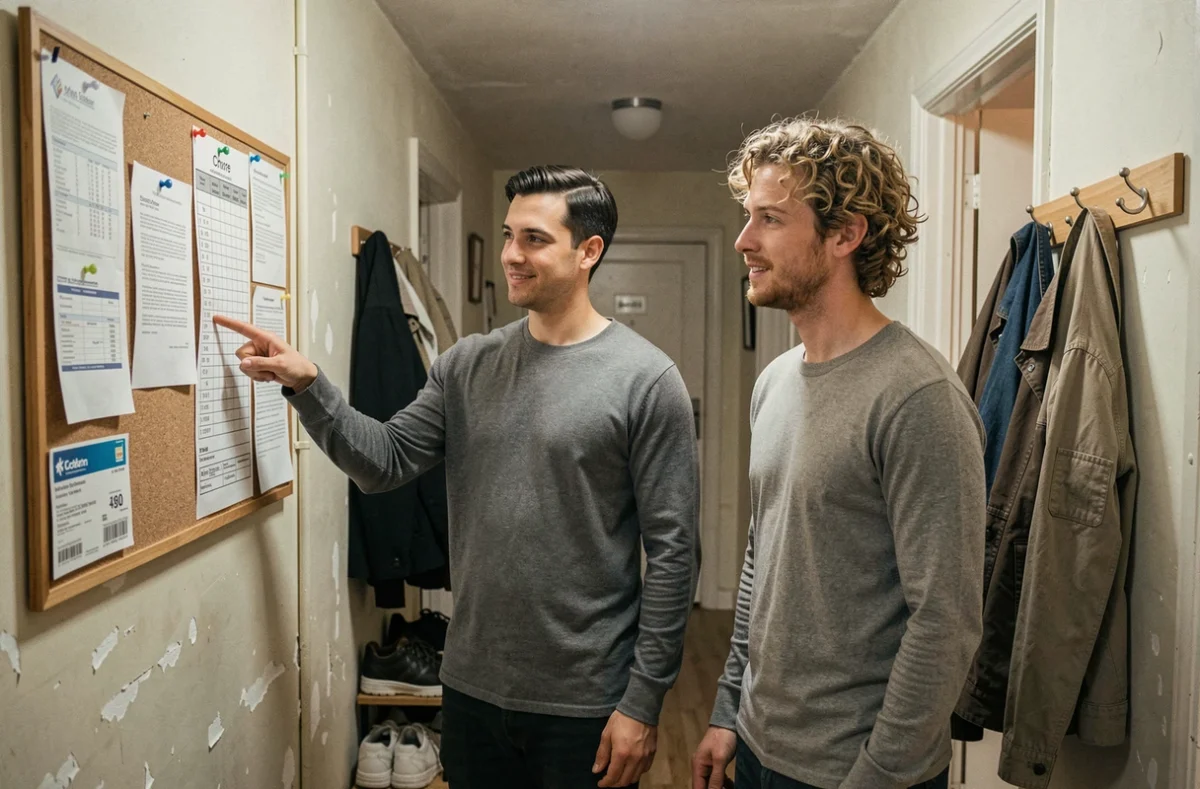
Everyday expenses in a shared rental: distinguish recoverable charges from shared bills
Recoverable charges (maintenance of communal areas, cold water, household waste collection) are set out in the lease and governed by law. Everyday utilities (electricity, gas, internet) are covered by an agreement between housemates, often outside the lease.
Keeping these two categories separate prevents double-counting and missed payments. Recoverable charges are already included in the flat-rate charge or advance payments. Energy and internet bills, on the other hand, need to be managed separately.
For shared bills, the most reliable approach is to centralise payments rather than make multiple reimbursements between housemates. One housemate pays the bill, and the others reimburse their share according to a set schedule.
- List each shared expense (electricity, gas, internet, household supplies) and decide how each one will be split
- Use a shared record or spreadsheet, updated monthly, so each housemate can see their contribution
- Keep proof of payment in case of a disagreement or someone moving out
Some housemates choose to open a joint bank account funded by automatic transfers. This makes it easier to track expenses, provided every account holder can review transactions.
Financial tensions in a shared rental are less likely to stem from disagreement over the method than from unclear rules. A written agreement, a reconciliation everyone understands and transparent tracking are enough to prevent most conflicts before they take hold.