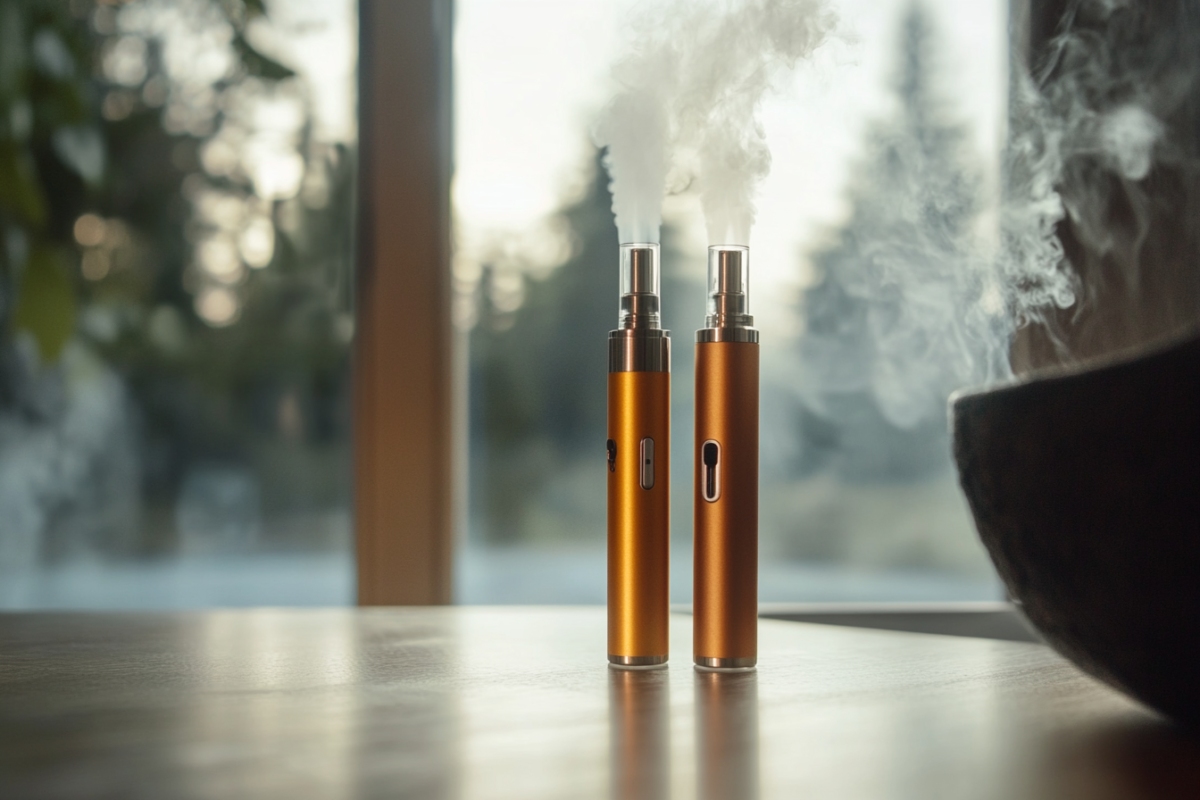
In the universe of the many vaping devices available today, Puff Bars stand out for their simplicity and discreet appeal. These small devices, often colorful and designed to be disposable, have become popular among vapers for their practicality and ease of use. Yet, behind their innocuous appearance lies ingenious engineering that delivers a satisfying vaping experience. Understanding how a Puff Bar works helps to grasp the subtleties of this device and its internal mechanisms.
Internal Composition of a Puff Bar
A Puff Bar is a masterpiece of miniaturization and simplicity. Inside, it houses several key components that work together to provide the desired dose of nicotine.
The device essentially consists of a battery, an e-liquid reservoir, a heating element, and a sensor. Each plays a crucial role in the vaping process:
- Battery: It powers the entire device. The battery is generally small but powerful enough to heat the heating element and vaporize the e-liquid contained in the reservoir.
- E-liquid reservoir: This is where the liquid mixture, often nicotine-infused, is stored. The reservoir is pre-filled and designed to last for a certain number of puffs.
- Heating element: This essential component heats the e-liquid, turning it into vapor that the user inhales.
- Sensor: It activates the heating element during inhalation. The sensor detects the pressure or airflow when the user draws in, thereby triggering the vaporization process.
Practical Operation of a Puff Bar
Understanding how a Puff Bar operates on a daily basis is essential to appreciate its ease of use. With each puff, several steps occur in sequence.
- When the user inhales, the sensor detects the action and triggers the heating element.
- The e-liquid contained in the reservoir is heated and transformed into vapor.
- This vapor is then inhaled by the user, providing the desired sensation.
- The process automatically stops when the user ceases to inhale, thereby saving battery life and limiting liquid waste.
Advantages and Limitations of Puff Bars
Puff Bars offer several advantages that appeal to a wide range of vapers, but they are not without drawbacks.
The main advantages include their simplicity and disposable nature. They eliminate the need to recharge or refill, making the vaping experience accessible even for novices. Furthermore, their compact and lightweight format facilitates discreet transport and use. However, their disposable nature raises environmental concerns. Each bar is intended to be discarded after use, thus increasing electronic waste. On the other hand, the limited selection of flavors and nicotine levels may not suit all users.
Ecological Impact and Future Perspectives
In light of the growing popularity of Puff Bars, discussions are emerging about their ecological impact, and innovative solutions are being considered to reduce their footprint.
- The disposable nature of these devices raises questions about waste management. The materials used, primarily plastic and metals, do not decompose easily.
- Initiatives are beginning to emerge to recycle or repurpose these products. Raising user awareness through recycling programs could mitigate these concerns.
- Manufacturers are also exploring more sustainable materials and rechargeable designs, which could offer a more environmentally friendly solution.
The puff represents a significant advancement in vaping technology, although it must adapt to environmental and regulatory needs.
Through their clever design, Puff Bars have managed to capture the market with their simplicity and efficiency. Behind their stripped-down appearance lies sophisticated technology that continues to evolve. As the demand for practical vaping devices persists, the challenge will be to combine convenience and sustainability while expanding the options available for users. These compact and accessible devices will undoubtedly play a role in the future of vaping, adapting to growing ecological sensitivities and the diverse preferences of consumers.