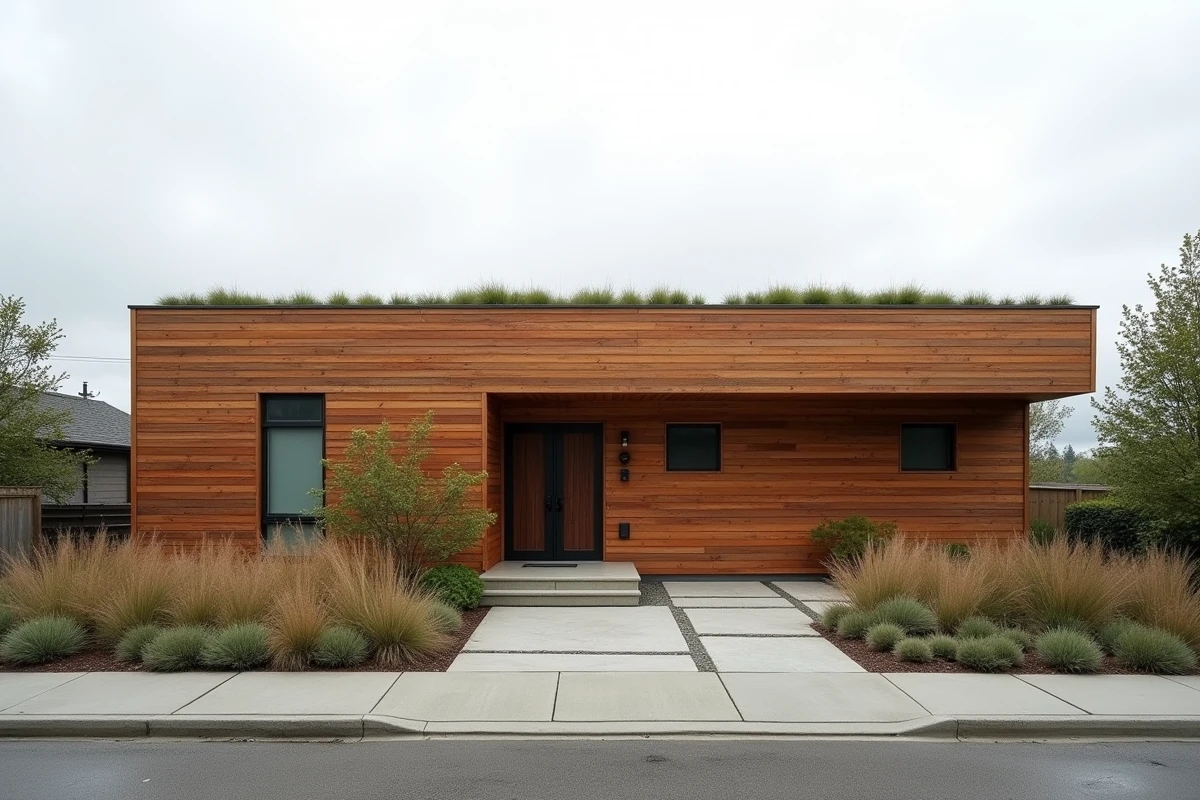
Flat-roof wooden houses are increasingly prominent in new construction and elevation projects. Their contemporary silhouette is appealing, but choosing this type of roofing involves technical decisions that go beyond mere style. Load-bearing structure, waterproofing, rainwater management: the flat roof with a wooden frame is primarily a demanding roofing system, and its implications deserve to be considered before any commitment.
Waterproofing and membrane: the real technical issue of a wooden flat roof
On a wooden house with a flat roof, the covering does not rest on tiles or slates but on a waterproofing membrane. The choice of this membrane determines the durability of the entire construction. Three families of materials dominate the market: bituminous membranes (SBS two-layer), synthetic membranes (EPDM, PVC), and liquid waterproofing systems.
Each solution presents different trade-offs in terms of repairability, aging resistance, and suitability for the local climate. An EPDM membrane tolerates temperature variations well, while a bituminous system offers a more familiar installation for many roofers. Field reports vary on the actual longevity of these solutions depending on the regions.
The continuity of waterproofing at the structure-membrane junctions is the weak link in most flat roof disasters. On a wooden frame, the natural movements of the material (shrinkage, expansion) require more rigorous implementation details than in masonry.
A localized defect in a waterproofing upstand or drainage can cause invisible infiltrations for months, with serious consequences for the insulation and the framework. Several builders now incorporate these points into their specifications, and Guide Immo’s tips detail some of these technical aspects.
Rainwater management on wooden flat roofs
A flat roof is never truly flat. The design includes a slight slope, usually around one percent, which remains imperceptible to the eye but is sufficient to direct water towards peripheral drains or integrated downspouts.
This minimal slope does not solve everything. The sizing of the drains must anticipate intense rainfall events, which are becoming increasingly frequent across much of France. A temporary blockage can turn the roof into a retention basin. On a wooden structure, this excess water can stress the framework beyond what was originally planned if the initial calculation did not include a sufficient margin.
Common solutions include:
- Drainage outlets placed at low points, with a diameter calculated based on the roof area and local rainfall
- Safety overflows positioned slightly above the normal level, to evacuate water in case of blockage of the main network
- Regular maintenance (at least twice a year) to clear leaves, moss, and debris that obstruct the downspouts
A serious builder provides a detailed roofing plan with the precise location of each drainage point. The absence of this document at the building permit stage is a warning sign.
Insulation and thermal performance of a wooden flat roof house
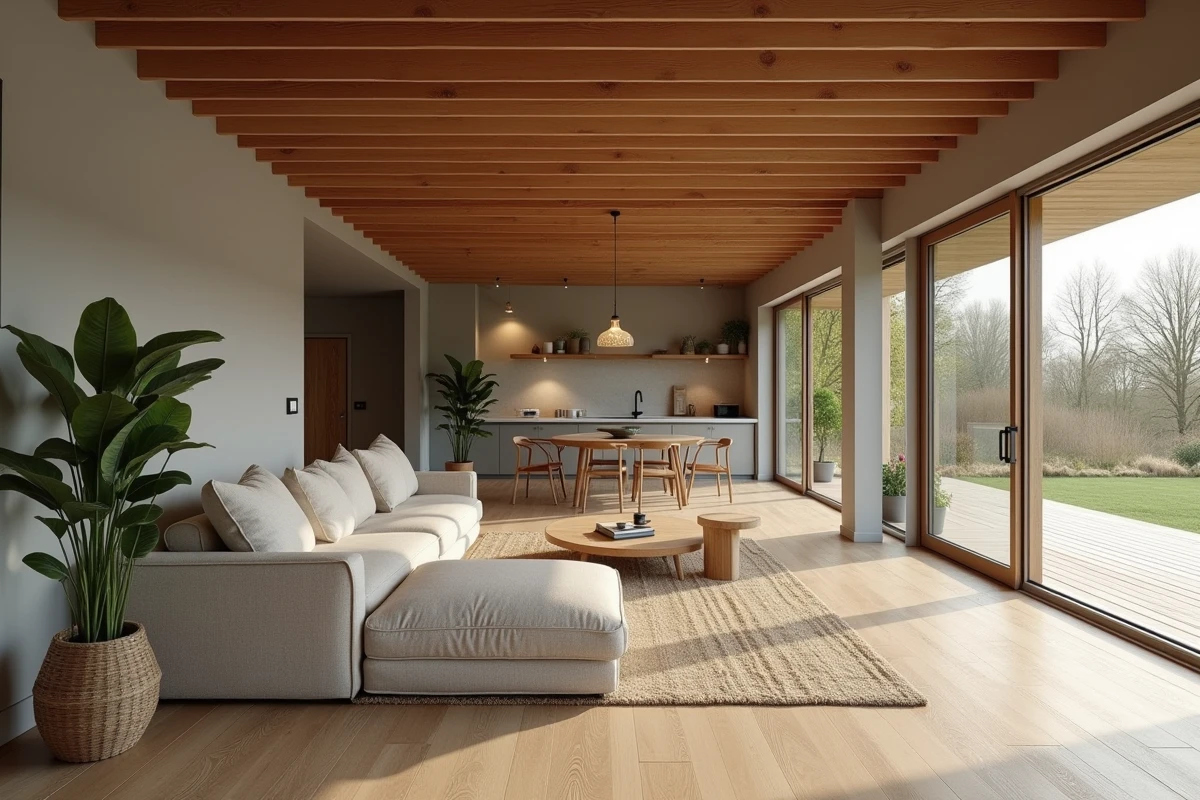
The flat roof offers a structural advantage for insulation: the entire roof surface can receive a uniform thickness of insulation, without the losses associated with lost attics or sloped areas. On a wooden frame, the insulation is generally placed between the joists and then as an outer layer, which limits thermal bridges.
However, the question of roof ventilation remains open. Two schools coexist: the warm roof (insulation glued under the membrane, without an air gap) and the cold roof (with ventilation between insulation and membrane). The warm roof dominates in recent constructions because it reduces the risk of condensation, but it requires insulation compatible with direct contact between the membrane and support.
The overall thermal performance also depends on the type of wood used for the frame. The wooden frame has a natural thermal resistance superior to concrete or steel, contributing to the overall energy efficiency. The available data does not allow for precise quantification of the gain compared to masonry construction, as configurations vary from one project to another.
Wood elevation and flat roof: an expanding use case
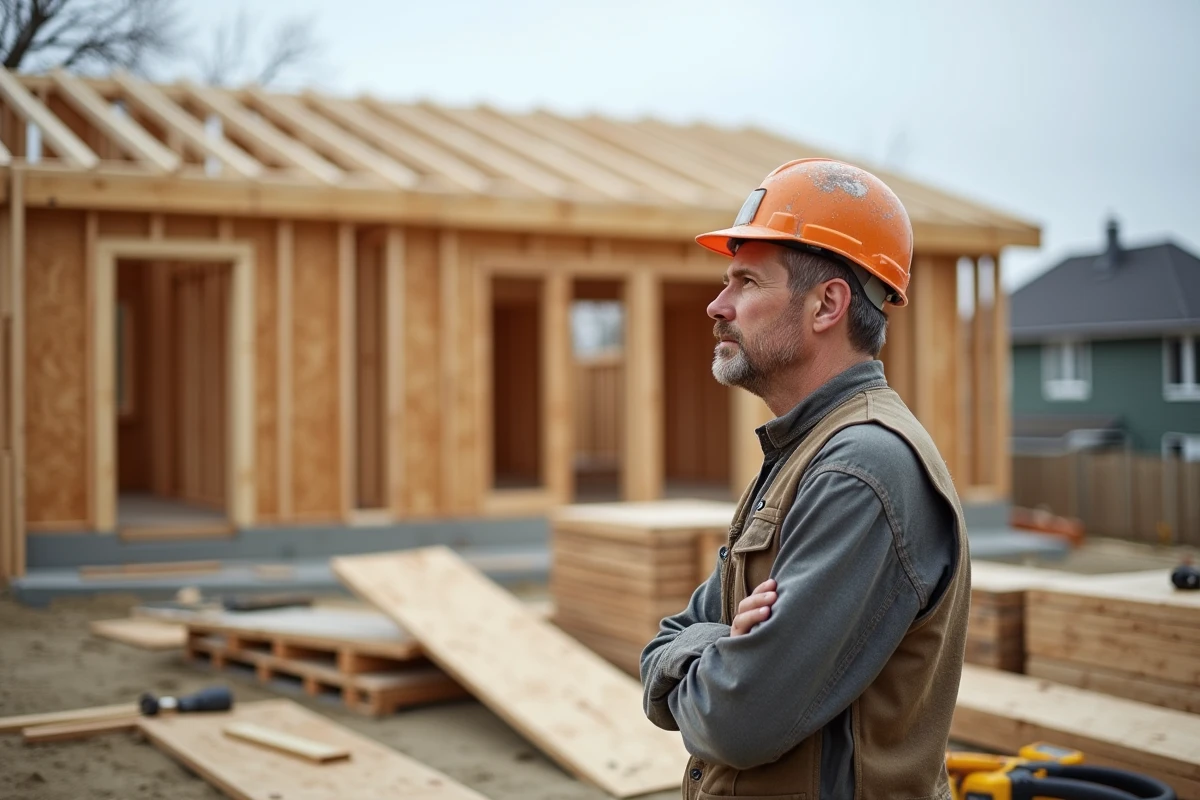
Wood frame elevation with a flat roof represents a growing share of renovation projects in dense urban areas. The reason lies in a combination of constraints: Local Urban Plans (PLU) often set a maximum ridge height, and the flat roof allows for an additional livable level without exceeding this limit.
The construction sequence is relatively standardized. It begins with the removal of the existing roof, followed by the connection between the new framework, the floor, and the wooden panel walls, and ends with the installation of the new flat roof structure. This method is often completed more quickly than a traditional extension, as the panels arrive prefabricated on site.
The main limitation concerns the existing building. The original load-bearing structure must support the additional load. A structural engineering office must intervene beforehand to verify the capacity of the foundations and load-bearing walls. On older stone or cinder block houses, reinforcements may sometimes be necessary, which can significantly alter the initial budget.
Green roofs and solar panels on wooden flat roofs
The flat surface of a flat roof opens up possibilities for development that sloped roofs do not allow. Two main uses dominate: the accessible terrace (vegetated or not) and the installation of solar panels.
A green roof provides additional thermal inertia and slows down rainwater runoff. On a wooden frame, the weight of the vegetation substrate must be integrated from the calculation of the framework, as it can represent a significant load once saturated with water.
For solar panels, the flat roof allows for free choice of the inclination and orientation of the modules thanks to adjustable supports, optimizing production compared to a sloped roof oriented in a non-ideal manner. The downside: the supports create attachment points that penetrate the waterproofing membrane, and each penetration is a potential risk of infiltration if not treated carefully.
A flat-roof wooden house is not a default choice nor a mere aesthetic preference. It is a complete construction system where each component (structure, membrane, insulation, drainage) depends on the others. The initial sizing, the quality of implementation, and regular maintenance of the roof condition the lifespan of the building as much as the choice of wood material itself.