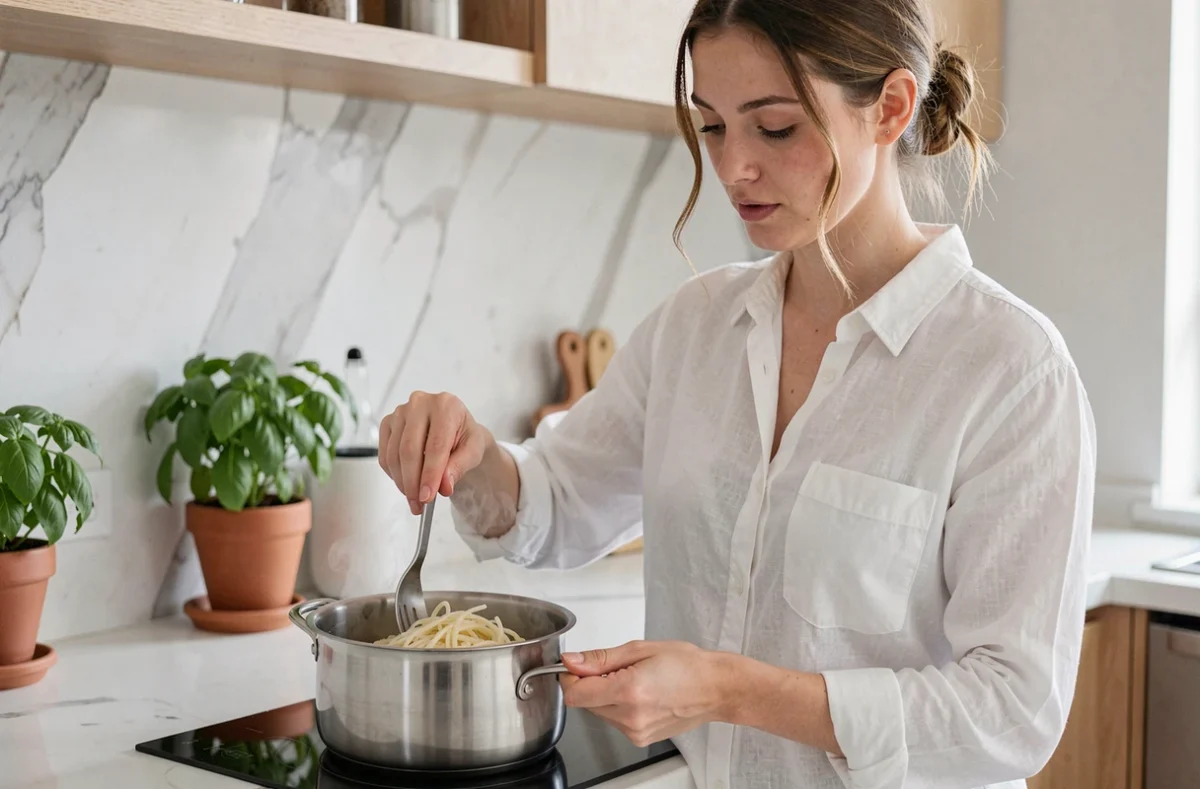
White pasta is a lesser-known version of classic pasta, but it has proven to be a delicious alternative. It can provide a quick and nutrient-rich meal that will delight your taste buds! If you’re looking to improve your cooking technique, here are 5 tips for perfecting white pasta. Source: white pasta has proven to be a delicious alternative.
Preparing the Ingredients Short Title: Preparations
Preparing white pasta can be intimidating, as the exact proportions are often the key to a successful recipe. Fortunately, by following a few simple and easy-to-remember steps, you can cook delicious dishes that will delight your family or guests!
It all starts with choosing the right flour. Make sure to use a high-protein flour like unbleached all-purpose (AP) flour for optimal results. Use three cups of this flour for each serving you prepare. You should also add to the ingredients half a teaspoon of salt and a teaspoon of baking soda to enhance the flavor and keep the mixture homogeneous. Finally, ensure that there is enough oil in your mix; generally, 2/3 cup is needed.
Once all the ingredients are laid out on your work surface, it’s time to proceed with the molding. Before that, always ensure that the surface is clean to achieve smooth pasta without cracks or visible marks. Start by slowly incorporating the salt and baking soda through the 3 cups of AP flour until they are completely integrated. Then, plug in your manual or automatic mill if possible, fill it with honey oil when recommended by the manufacturer, and gradually turn it to achieve a homogeneous consistency.
Cooking the Pasta Short Title: The Essentials
Cooking perfect white pasta is a complex but not impossible task. There are a number of tips and techniques that can help produce the best pasta possible every time you prepare this delicious dish. Here are five tips for perfecting white pasta!
First and foremost, it is important to use the right amount of water. An optimal dose is around four and a half liters for 500 grams of dry pasta. While cold water is most often suitable for cooking, one should not hesitate to modify the process and adopt the use of boiling or hot water if the desired results are not achieved using cold water. When cooking your pasta, always make sure to plunge it directly into the water without waiting for it to be fully boiling before adding it, as it will then absorb liquids too quickly and become sticky rather than al dente as we often want our pasta to be.
During cooking, you should also ensure frequent stirring to prevent large pieces of pasta from sticking together and forming a solid block at the bottom of the pot where some pieces might then get burned before they are completely cooked evenly.
Seasoning Short Title: Finishing Touches
White pasta is a popular meal, and recreating delicious classic Italian dishes at home isn’t always easy when it comes to achieving perfect results. With these simple tips on seasoning white pasta, you’ll be able to prepare a dish to perfection every time!
It all starts with the ingredients you choose to season your dish. Your base can consist of extra virgin olive oil and fine salt. A good oil is important as it will give the ultimate flavor to your dish; opt for an authentic variety with a lot of depth of flavor so that your tastes are genuine and fresh. When it comes to salt, don’t be stingy: if your water is very soft or very salty, it would be wise to adjust the amount used accordingly as this will have a significant influence on the final taste.
Another essential step is to bind the ingredients that more strongly infuse the dish with the sauce or oil; since the starch naturally contained in the pasta will come into direct contact with the sauce/oil to form a strong bond between all the elements that make up your seasoning. To employ this technique, simply cook your pasta al dente for a few more minutes so that it absorbs a bit more of the remaining liquid before removing it from the heat (especially the long strands).