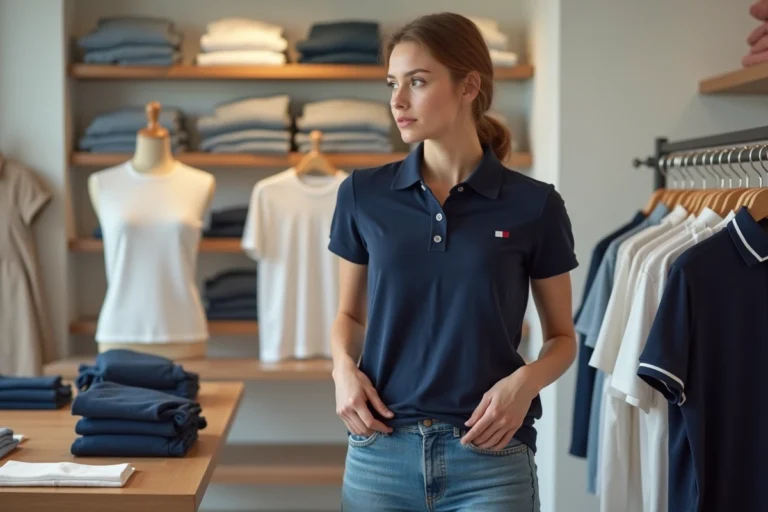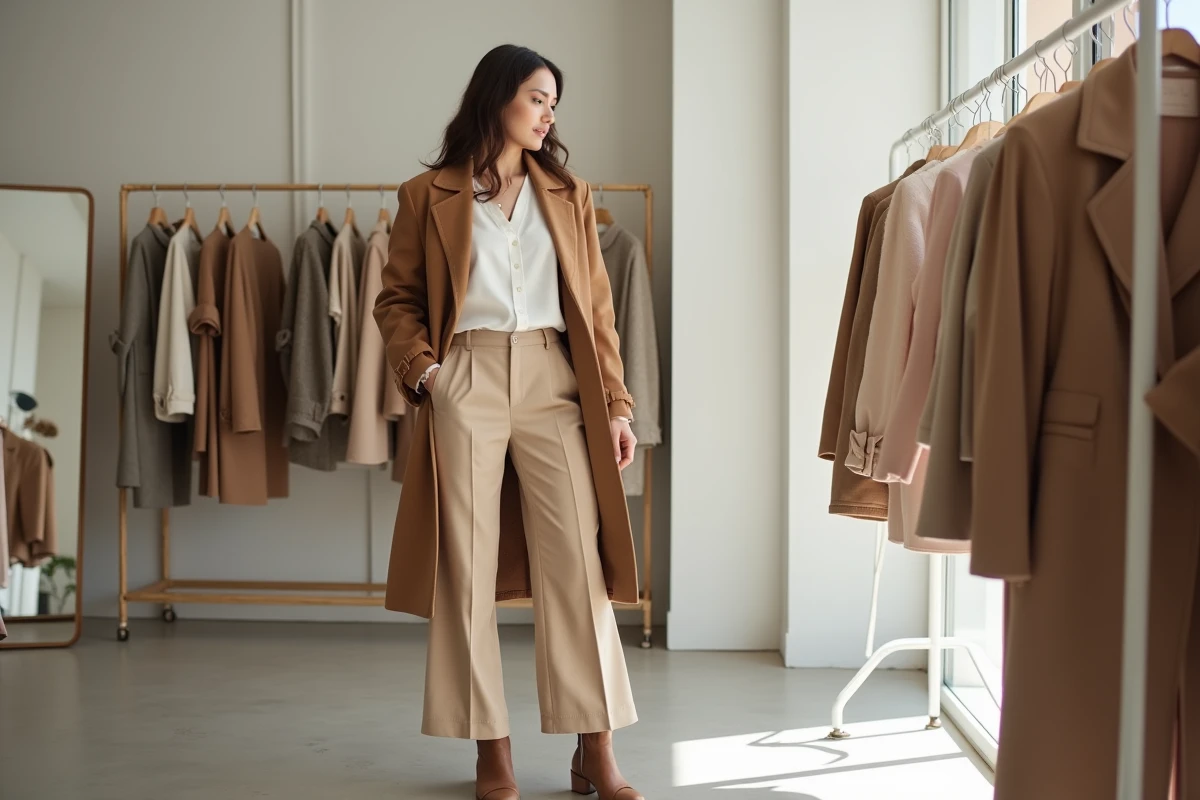
The 2026 wardrobe is based on a productive paradox: the simplest pieces require the most technical rigor. A poorly cut white t-shirt or a blazer made from too thin a fabric immediately betrays the silhouette. We observe that current fashion trends reward choices of materials and cuts much more than the accumulation of statement pieces.
Architecture of clothing: cuts that structure the silhouette
Fashion advice articles list pieces to buy. Rarely do they explain why a cut works on a given body. The answer lies in what we call the architecture of clothing: the way the lines, volumes, and support points of a piece interact with the morphology.
Vertical cuts create an illusion of height, while a defined waist reshapes the bust-hip proportion without resorting to tight-fitting styles. These principles apply regardless of style, from workwear to relaxed tailoring.
The material plays a role at least equal to that of the cut. A fabric that drapes well and supports without flattening the silhouette produces a radically different effect from a textile that is too rigid or too thin. Designers who stand out this season favor dense fabrics, heavier knits, and thick linens. This logic can be found on La Petite Emma’s fashion site in the selection of pieces that are both comfortable and structured.
Specifically, three parameters deserve your attention before any purchase:
- The thickness of the fabric to the touch: a sufficiently dense weight avoids transparency, quick wrinkling, and a cheap look, even on a basic item at a low price.
- The placement of shoulder seams: they should fall exactly on the shoulder bone, neither too far back (tight effect) nor beyond (uncontrolled oversized effect).
- The length of the garment in relation to your natural waist point: a blazer that stops below the hip elongates, while a model that is too short cuts the silhouette in half.
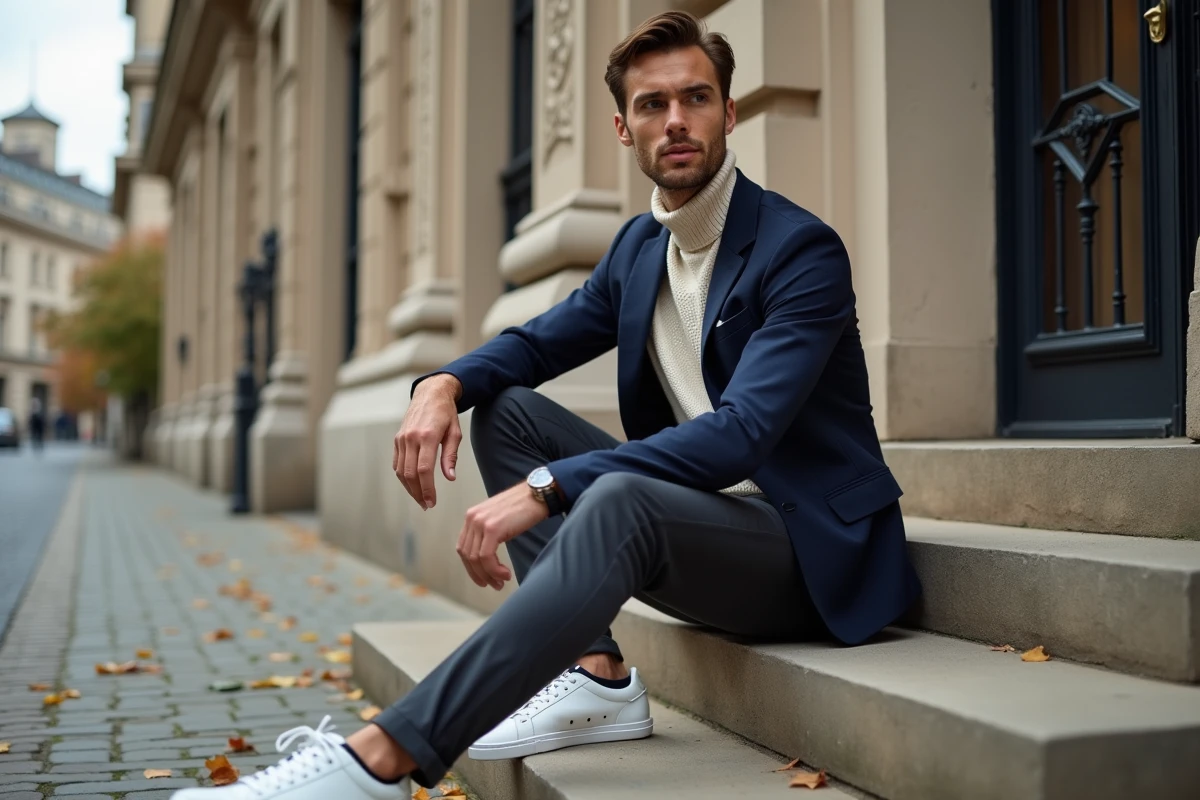
Quiet luxury applied to basics: materials and finishes to spot
The term quiet luxury has been circulating for several seasons. In 2026, it takes a concrete form: perceived luxury shifts towards basics with impeccable cuts and quality materials. The white t-shirt, straight jeans, trench coat, blazer – these pieces become the most readable style markers.
This movement distances itself from both fast fashion and overly flashy pieces. The signal of quality comes through discreet details: a collar that holds its shape without distorting, clean buttonholes, regular topstitching, a crisp drape after several washes.
Recognizing a basic that will last
We recommend systematically turning the garment inside out in the fitting room. The interior finishes (overlocked seams, partial lining on a blazer, interfacing reinforcement at the collar) say more than the brand label. A well-constructed basic retains its shape season after season, making it a worthwhile investment even at a higher price.
A good basic goes unnoticed; it structures the rest of the outfit. This is the fundamental principle of the 2026 wardrobe: the standout piece is the one you don’t see first.
Trendy colors and chromatic logic for composing a look
The colors of the season revolve around three axes: butter yellow, royal blue, and warm neutral tones (beige, camel, off-white). But wearing a trendy color is not enough. The challenge is to understand how it fits into your personal palette.
Butter yellow works best on warm complexions, paired with raw denim or cream white. On cool skin tones, royal blue creates a contrast that brightens the complexion without overwhelming it. Blogs list these colors without ever explaining this chromatic mechanism, which makes all the difference between a harmonious look and an outfit that seems mismatched.
Composing an outfit from a single strong color
The rule we apply: one bright-colored piece per outfit, surrounded by neutrals. Butter yellow on fluid trousers, with a white top and tone-on-tone accessories. Or a royal blue blazer over a total beige look. This approach avoids the trap of poorly balanced color-blocking, which ages quickly.
Natural materials (linen, thick cotton, lightweight wool) absorb bright dyes better and produce a more matte, sophisticated finish than shiny synthetics. This technical detail explains why the same color looks luxurious at one brand and cheap at another.
Men’s fashion 2026: relaxed silhouettes and functional details
Fashion trend content remains heavily oriented towards women’s wardrobes. However, the men’s wardrobe of 2026 deserves specific attention. Brands like Eden Park are already detailing the changes: relaxed suit cuts, rethought volumes, preference for natural materials.
The dominant men’s silhouette abandons strict slim fits in favor of straight or slightly loose cuts, which are more comfortable and easier to wear daily. Pleated trousers are making a comeback, but in lightweight fabrics and soft colors, far from formal suits.
The functional chic wardrobe
The most striking trend for men is the fusion between functional clothing and elegance. Utility pockets, discreet technical fabrics, and waterproof finishes are integrated into classic cuts. This triple logic (pleasure, comfort, natural materials) goes beyond simple lists of clothes to buy.
A brushed cotton chino with a grained leather belt and a thick knit t-shirt: this type of combination well summarizes the men’s style of 2026, where each piece serves both comfort and style.
The best fashion tip remains the oldest: choose fewer pieces, but choose them well. A wardrobe focused on solid basics offers more combinations than an overloaded closet. Material, cut, color: these three criteria are enough to transform any look, without chasing every seasonal micro-trend.